Magazine / Magazine: Policy and market
A scratch on the bow: what a minor claim does to your no claims discount
A scrape in the gelcoat, a bent stanchion at the pontoon: is it worth claiming on the hull cover? The no claims clause in your wording decides what the next renewals will cost.
12 November 20266 min readNAMMERT Assekuradeur GmbH
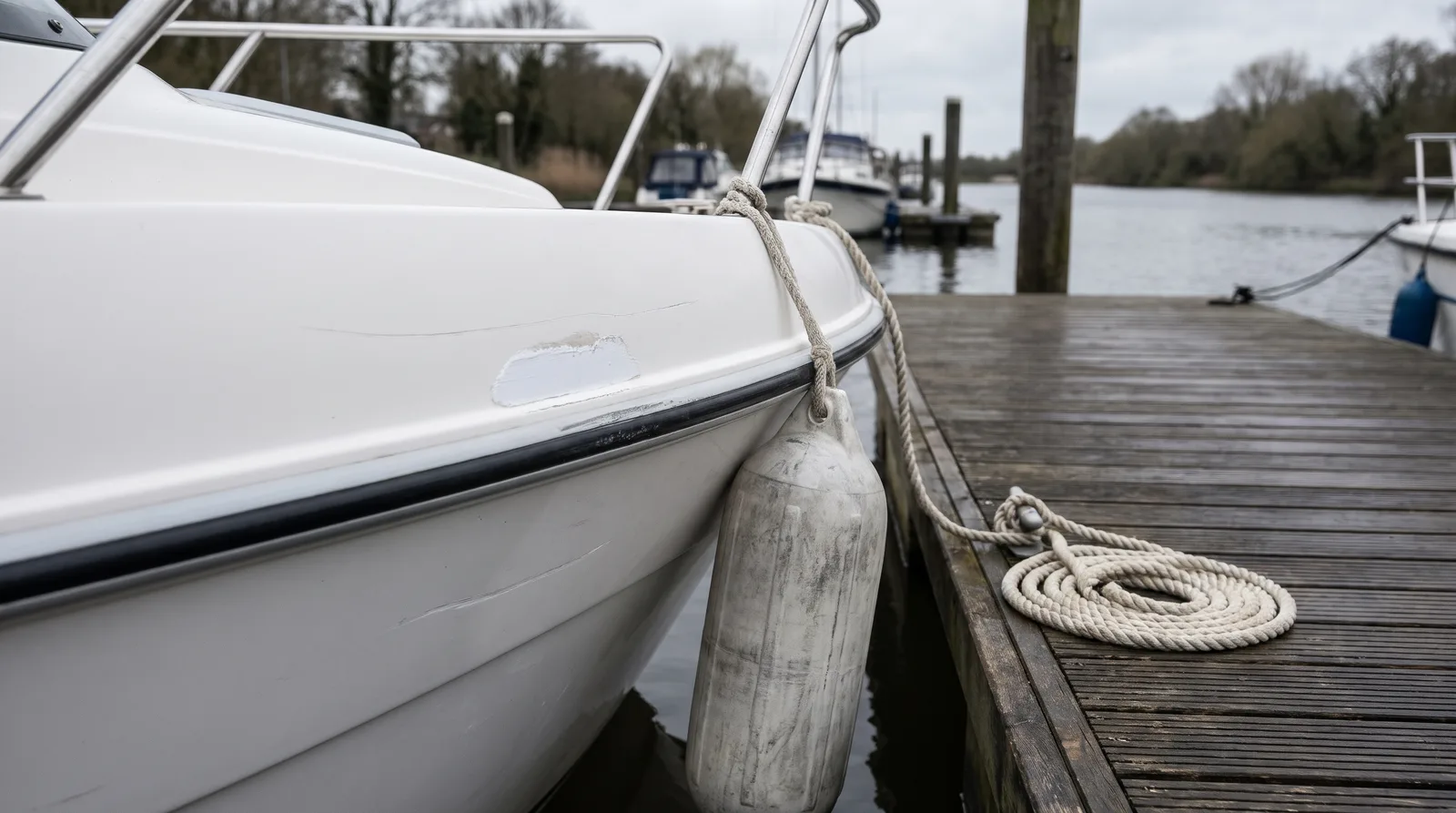
A scratch on the bow or a scrape in the gelcoat while berthing, a dent in the bow from a neighbour's fender, a bent stanchion on the pontoon: minor damage is the most common loss a boat owner has, and every year it brings the same question. Is it worth a hull claim, or will the lost no claims discount cost more than the claim pays? What a minor claim does to your discount on a motor boat, a sailing yacht or a small cabin cruiser is decided by a short clause of the hull wording, often only four or five sentences long. Not every contract has one at all, so the first check is whether your schedule shows a no claims discount.
Read first how the discount starts. Some insurers give the full discount to a new customer whose previous policy was claim free, without asking for years of history; others build it up slowly or ask for proof from the former insurer. Check also which boats are left out: houseboats and very small craft are excluded from the discount in some comparison sheets. Then read the step down. A typical clause cuts the discount at the next renewal after a claim that was paid or for which the insurer set aside a reserve, and removes it entirely after two such claims in one policy year. Note the exact trigger words, payment or reserve, because they matter later.
Next comes the way back. Many wordings add a fixed step for every full claim free policy year until the maximum is reached again. From the size of the step down and the step up you can work out the price of a small claim yourself. If the discount falls by twenty points and returns in steps of ten, you pay twenty percent of the undiscounted annual price extra in the first year and ten percent in the second. Compare that sum with what the claim would pay after the deductible. If the two are close, paying for the repair yourself may be the better choice.
Look for a protection clause. Some hull wordings say that after five or more claim free years the first claim does not reduce the discount, and some halve the deductible for that first claim as well. Check whether these benefits apply to every craft on the policy: a jet ski clause can switch the reduced deductible off and deduct the full amount every time. Look also for exceptions that never count as a claim, such as pure assistance or the cost of inspecting the hull after a grounding when no damage is found. Whether such an exception exists differs from one wording to the next.
Then check the other sections. Liability, personal accident and legal expenses usually have no no claims discount of their own, but read your schedule rather than assuming it. A liability claim after a collision in the marina is then simply outside this calculation. Look as well for a buy back option, a clause that lets you repay a settled claim to keep the discount. Motor insurance often has one; hull wordings for boats frequently do not, and if yours says nothing, ask the insurer before you accept a payment.
Whatever the arithmetic says, the duty to report stays. Most wordings require every insured event to be reported without delay and in writing, including the one you intend to pay yourself, and a late report can cost far more than a lost discount. Under the usual wording the reduction follows a payment or a reserve, not the report itself. If you decide not to claim, say so early and in writing, before a reserve is set. Finally, check the right to cancel after a claim: many contracts allow either side to end the policy within a short period once the claim has been settled.
In practice the order is simple: report first, calculate second. Your schedule shows the deductible, the current discount and the annual price before discount; the yard's estimate shows the cost of the repair. With those numbers on one page the decision takes five minutes. For damage far above the deductible the claim is almost always right, and for a scratch just above it the owner's own paint pot often is. Either way, the decision is taken in writing and with the clause in front of you, not at the pontoon.
Worth checking
Common questions
Does reporting a loss reduce my no claims discount?
Under many wordings the reduction follows a paid claim or a reserve, not the report itself. A year with a reported loss may still not count as claim free when the discount is meant to rise again, so read both sentences of the clause.
Can I repay a hull claim to keep my discount?
Only if your contract offers a buy back. Many boat hull wordings do not mention one. If you think about paying the repair yourself, say so in writing before the insurer sets a reserve.
I have had no claim for six years. What does the first one cost me?
Look for a protection clause. Some wordings keep the discount after the first claim once five claim free years are reached, and some halve the deductible for that claim, with exceptions for jet skis.
Related
