Copenhagen weighs the end of Langebro lifts
On 9 September 2026 Copenhagen opened a six week consultation on the future of the Langebro. From mid 2028 the worn bridge leaves will no longer allow openings to be ordered at all.
Market NAMMERT Assekuradeur GmbH
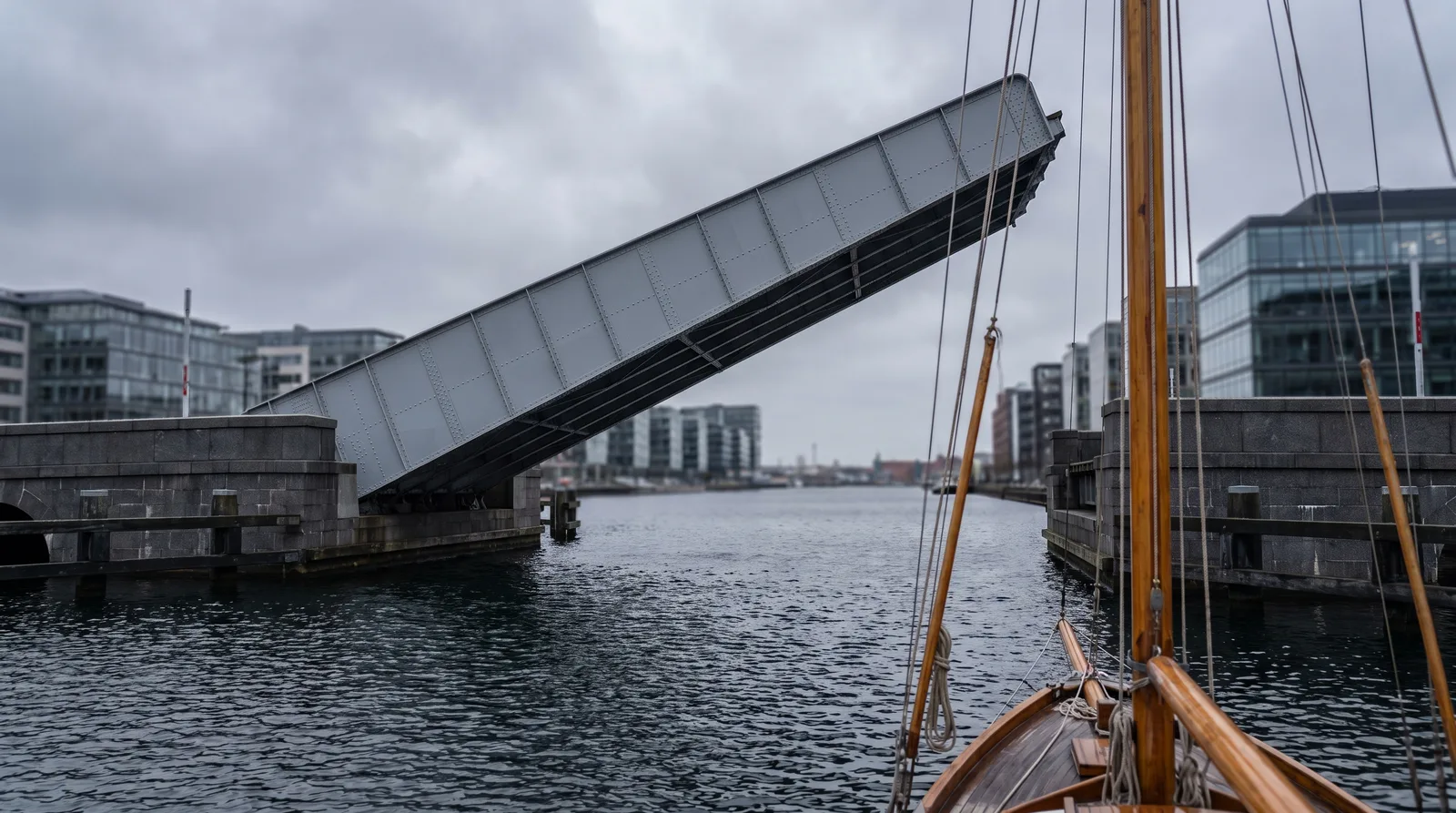
The city of Copenhagen opened a six week consultation on 9 September 2026 on the future of the Langebro, the bascule bridge across the harbour. The bridge is opened around 100 times a year, mainly for excursion vessels, and also for houseboats, work craft and private sailing yachts. Two refit options are on the table, one that keeps the bridge movable and one that leaves it permanently closed.
What is new is that permanent closure is presented as an equal option rather than a fallback. Keeping the bridge movable is costed at 400 to 417 million Danish kroner. For the closed option the two sources give different amounts, so no figure is quoted here; both agree that it would be considerably cheaper. With the bridge down, the clearance is about seven metres above normal water level.
One date matters more than the consultation itself. From mid 2028 no openings can be ordered any more, because the leaves are worn out. Anyone who wants to reach the South Harbour with a standing mast, or leave it, has to plan for a gap of several years whatever the city decides. The political decision is due in spring 2027, as part of the municipal budget talks.
What this means for owners
A blocked passage is a planning problem long before it becomes an insurance question. It affects sailing yachts with a standing mast, houseboats and tall cabin cruisers, while motor boats under about seven metres of air draught keep passing. If a bridge closure makes you unstep the mast, move the berth or lay the boat up ashore, ask your own insurer in writing how craning, road transport and winter storage are treated, because those are separate questions from a loss under way. Disputes about when mast damage actually happened are a familiar pattern in claims files.
This paragraph is our view as an underwriting agency, not part of the news. What your own policy covers is written in your own terms; when in doubt, call us.
Where this comes from
- YACHT: Langebro bleibt für Schiffe vielleicht geschlossen (19.09.2026)
- Bådmagasinet: Fremtiden for Langebro til debat (16.09.2026)
The text above is our own. The sources listed supplied the facts and the figures, not the wording.