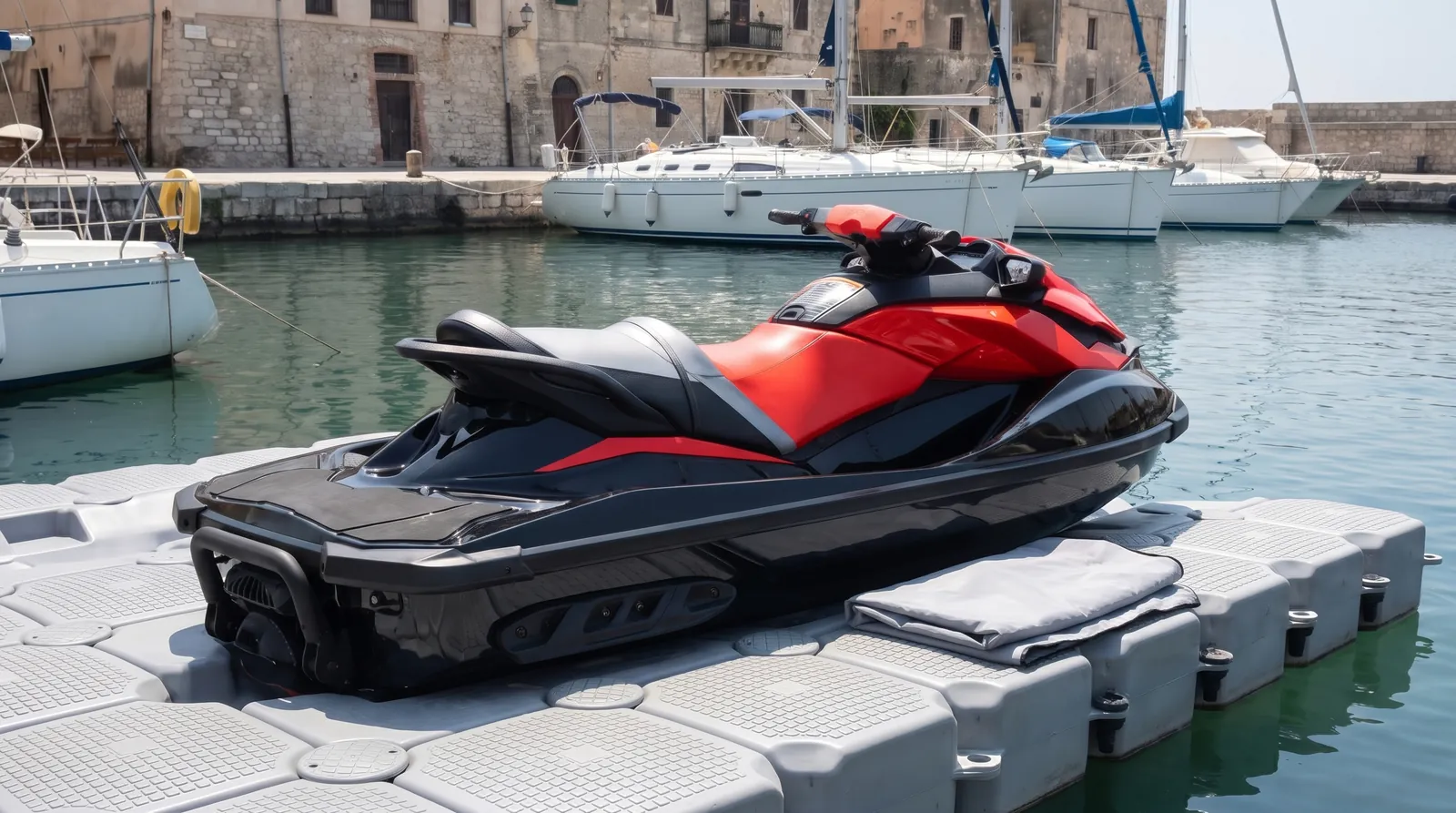
Magazine / Magazine: Boat and season
Sea-Doo RXT X 260 RS insurance check: market value, agreed value, accessories and trailer
What reaches you after a loss depends on the value in the policy. Part two of this insurance check explains market value, agreed value, accessories and the trailer.
6 November 20267 min readNAMMERT Assekuradeur GmbH
Part one of this series covered the details of the Sea-Doo RXT X 260 RS that belong in a policy. Part two of the insurance check is about value: how it is set, what it includes and what happens to accessories and the trailer. The rule of the whole series still applies. We have not ridden the craft, we do not rate it and we name neither a market price nor a sum insured. What follows are the questions that decide whether enough money reaches the owner after a loss, and the points in any hull policy where the owner makes that decision himself or herself.
Many of these jet skis change hands second hand, which makes the basis of value especially important. Some hull wordings settle on market value: the amount needed on the day of the loss to replace the craft with one of the same kind and quality, minus a deduction for age, wear and use, with the sum insured as the ceiling. Some add an age scale on a total loss, with growing percentage deductions after a few years. For a jet ski with several seasons behind it, such a scale applies regardless of how well it has been looked after. Read the schedule to see which basis applies.
The alternative is an agreed value. Here the sum insured stated in the schedule, agreed by both sides when the contract is made, counts as the insured value. The conversation about value happens before the loss rather than after it, and some wordings also waive the argument of underinsurance. The sum chosen by the owner also drives the price of the cover. If it is set too low, money is missing after a total loss. Anyone who bought second hand should lay the bill of sale and the invoices for any added equipment next to the proposal before entering a figure.
Most wordings define the craft as the hull with all permanently fitted parts, its machinery and technical installations and its accessories. The trailer and other water sports equipment are often treated separately and are only included if they were declared with their own sum insured. A floating jet ski dock at the mooring is a typical separate item. Personal belongings such as towels, sunglasses or phones are excluded in some wordings and included in others, so check the schedule. Jet ski, trailer and dock are three lines on the proposal, and each needs its own figure.
With the trailer it pays to keep hull and liability apart. In some contracts a named trailer can be included in third party liability, while hull cover for the trailer needs its own sum and price and may be limited to listed hazards such as accident, storm, lightning, fire, explosion and theft. On the jet ski itself the deductible deserves attention: some jet ski clauses apply it to every claim without exception and remove the reduction that motorboat owners receive after several claim free years. Part four explains how a trailer should be secured against theft.
That leaves modifications and how value changes over time. Anyone who adds equipment changes the overall value on which the sum insured is based, and most wordings allow an increase on presentation of invoices or a survey. Some accept an increase in value only if it was declared and documented. Performance modifications can also count as an increase of risk. A loss in value after a repair, often called diminished value, is usually excluded as consequential loss in hull wordings, so only the cost of the repair is paid. Part three shows which damage is typical for a jet ski and how wordings deal with it.
Insurance checkPart 2 of 4
Sea-Doo RXT X 260 RS: an insurance check
All parts at a glance
- Sea-Doo RXT X 260 RS insurance check (Policy)
- Sea-Doo RXT X 260 RS insurance check (Value)
- Sea-Doo RXT X 260 RS insurance check (Damage)
- Sea-Doo RXT X 260 RS insurance check (On the move)
Worth checking
Common questions
Is agreed value worth it on a used jet ski?
That is the owner's call. With market value the replacement cost is worked out after the loss, minus age and wear, sometimes with an age scale on a total loss. With agreed value the sum fixed when the contract was made counts as the value.
Is the trailer automatically part of the jet ski's value?
Usually not. Many hull wordings include the trailer only if it was declared with its own sum insured. In liability cover a named trailer can sometimes be included as well. Read both parts of the contract.
Is the loss in value after a repair paid?
In most hull wordings it is not. Diminished value after a repair is treated as consequential loss and excluded, so the payment covers the repair itself under the rules of the contract.
Related
