Magazine / Magazine: Boat and season
Sea-Doo RXT-XRS 300 insurance check: typical jet ski damage and what the wording decides
Part three of this insurance check looks at the damage typical for jet skis and the wording that decides each claim. It is about the type of craft, not this model in particular.
16 October 20268 min readNAMMERT Assekuradeur GmbH
After the policy and the value, part three of this series turns to typical jet ski damage and to what the wording decides in each case. One point first: the damage described here is typical for jet skis as a type of craft, not for the Sea-Doo RXT-XRS 300 in particular. Nobody here has ridden the model, and nothing in this text suggests it is prone to any kind of damage. What follows is how hull, accident and liability wordings commonly treat the claims that come up again and again with jet skis, and which clauses to look for in your own contract. Part four then covers the trailer and the ramp.
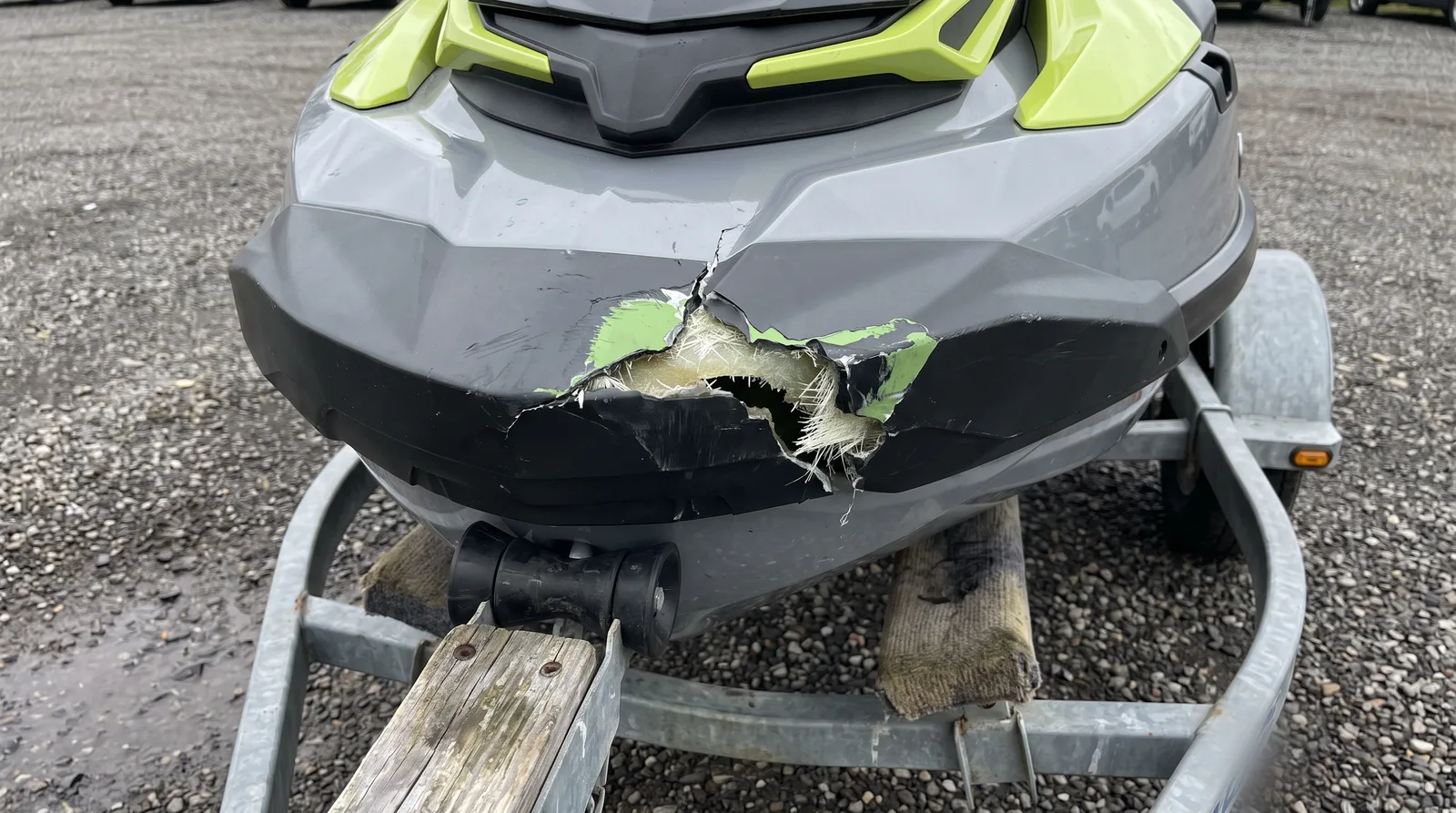
The most common case is contact with something solid: the jetty when coming alongside, a rock in shallow water, another craft. These are accident events. Broader hull covers usually name grounding and collision with fixed or floating objects explicitly, while narrower covers limited to named hazards such as storm, fire and theft leave them out. Some pay for an inspection after a reported grounding, up to a limit or without one. Jet ski clauses often add a hull exclusion: damage that does not impair normal use is not paid. A crack in the bow that affects riding is a different matter from a scratch in the gelcoat.
One kind of damage belongs only to jet skis: the pump that draws in rope, gravel or weed along with the water. The question is then whether an external event caused it or whether it is operating damage. Many hull wordings exclude wear on the worn part itself but pay for direct consequential damage to other insured parts. Operating damage to machinery, poor maintenance and corrosion are commonly excluded. Many jet ski clauses also exclude engine damage from water ingestion unless it follows directly from a collision with a fixed object. If you find debris in the intake, keep it and photograph it before the workshop throws it away.
Theft and vandalism are where policies differ most. Narrow covers often insure only theft of the whole craft; broader ones add break-in, theft of parts and malicious damage. Jet ski clauses commonly require the craft to be secured against unauthorised use at night and whenever the owner is away for a longer period, winter storage included. Typical examples are a locked building or plot, a jet ski dock with a security cable or protected storage in a marina. Many wordings refuse theft claims when the craft stood ashore on an open, unfenced plot; some lift that condition but double the deductible unless it was locked away.
Taking someone along raises the question of personal accident cover. Covers attached to a boat policy differ in whom they protect: sometimes only the owner, sometimes the owner and close family, sometimes every authorised person on board. Cover usually applies worldwide, but only while the craft is being used, not around the clock. Some covers give jet ski riders a higher benefit for a head injury if a standard helmet was worn. If a passenger loses sunglasses, a phone or a bag overboard, hull cover rarely pays, because loose items falling overboard are a common exclusion.
Then liability, which matters a great deal on a jet ski because swimmers and other craft are often close. Liability cover pays for injury and damage to third parties for which the rider is legally liable. Towing water skiers, wakeboarders or inflatables may be included or excluded, so look for the clause. On gross negligence, hull wordings may reduce a payment in proportion to the fault, and some waive that reduction up to a share of the sum insured, though rarely for theft, drugs or alcohol. Report any damage before repairs start; our number is +49 3375 566 75 05. Trailer, storage and racing follow in part four.
Insurance checkPart 3 of 4
Sea-Doo RXT-XRS 300: an insurance check
All parts at a glance
- Sea-Doo RXT-XRS 300 insurance check (Policy)
- Sea-Doo RXT-XRS 300 insurance check (Value)
- Sea-Doo RXT-XRS 300 insurance check (Damage)
- Sea-Doo RXT-XRS 300 insurance check (On the move)
Worth checking
Common questions
Does hull cover pay if I hit the jetty when coming alongside?
If your policy includes accident cover, a collision is usually an insured event. Many jet ski clauses still exclude hull damage that does not impair normal use. Covers limited to named hazards do not include collisions at all.
Is a worn part of the jet pump covered?
Usually not the worn part itself, because wear in normal use is a common exclusion. Direct consequential damage to other insured parts is often covered. Poor maintenance and corrosion are typically excluded.
Who is protected if a passenger is hurt?
That depends on the accident cover: some protect only the owner, some close family as well, some every authorised person aboard. Claims by an injured passenger against the rider fall under liability cover.
Related
