Etap 22 insurance check: typical sailing boat claims and what the wording says
Part three of the Etap 22 insurance check starts from the type of boat: the claims a small sailing boat can meet and the clauses in a wording that decide them.
11 October 20267 min readNAMMERT Assekuradeur GmbH
The third part of this insurance check on the Etap 22 starts from the type of boat, not the model. Nothing here says that a particular kind of damage is common on this boat, because that could not be shown without testing it. What follows are typical claims a small sailing boat of this size can meet: grounding on the keel, dismasting, a torn sail, water in the boat on the mooring and a collision on the race course. For each one, this is what to look for in the wording, whoever the insurer is.
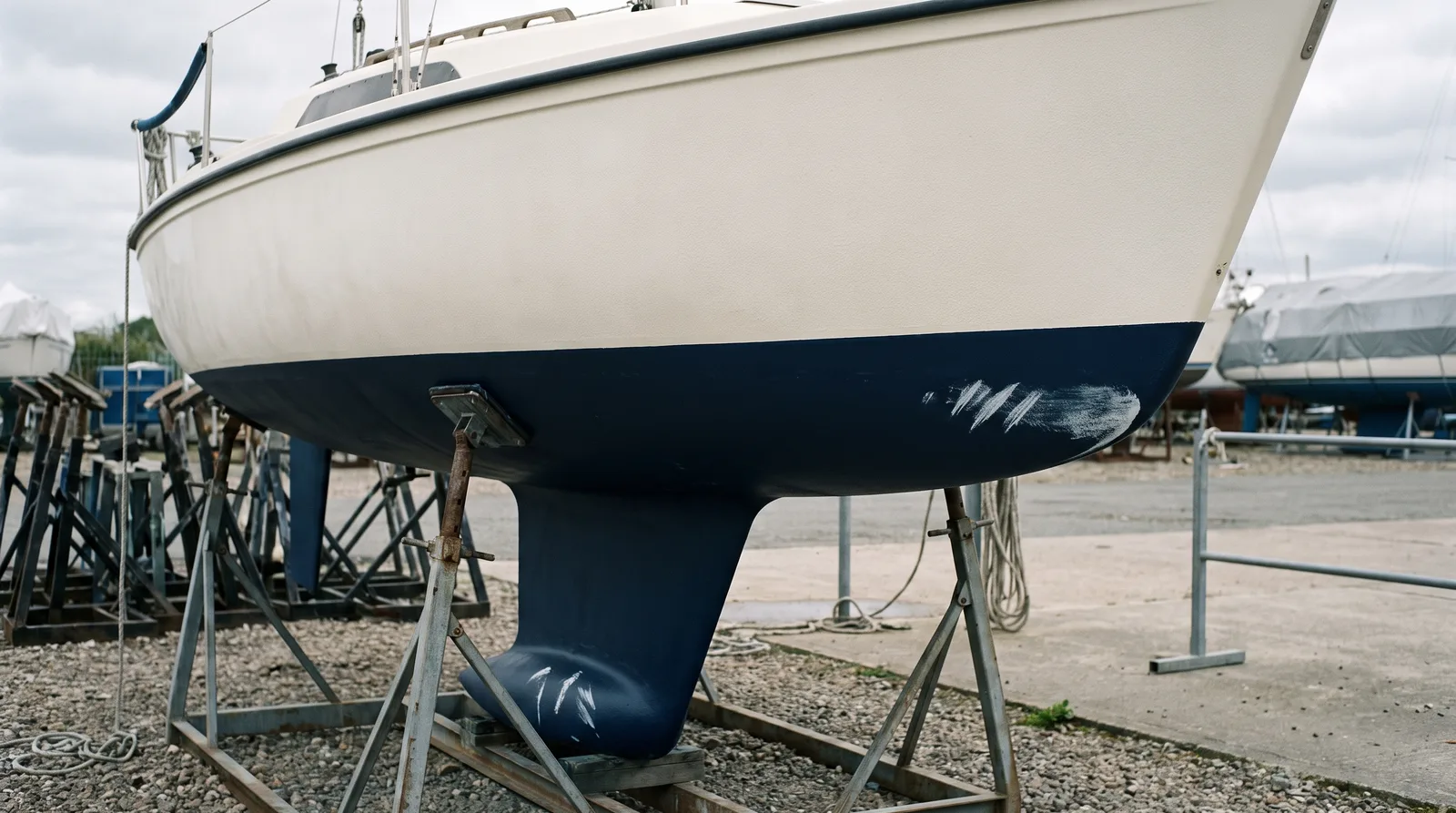
Grounding is a familiar event on shallow inland waters and on coasts with changing depths. Many hull wordings with accident cover name running aground, stranding and collision with fixed or floating objects explicitly as accidents to the vessel. Narrow wordings that list only storm, fire and theft of the whole boat do not cover grounding at all. Look also for a clause on inspection costs after a reported grounding, since lifting the boat to check the keel costs money even when nothing is found, and check whether such a claim affects the no claims discount.
Around the rig, accident and wear sit close together. Wordings with accident cover often list breaking and bending of masts, spars and booms, of standing and running rigging, and tearing of sails as accidents. Where only storm is insured, the definition of storm decides, often a wind of at least force 8 on the Beaufort scale; a sail torn at force 6 is then outside the cover. Sun damage to sailcloth is usually excluded as weather exposure, sometimes with an exception for storm.
The boundary with wear and tear is the most important exclusion for an older sailing boat. Typical wordings exclude design, manufacturing and material defects and normal wear at the parts directly affected, but cover resulting damage to other insured property. Applied to a rig: the worn shroud that fails is the owner's cost, the mast that comes down with it may be the claim. Look for separate exclusions for poor maintenance, rust, corrosion, osmosis and cavitation. In a claim, the maintenance record is the paper that separates resulting damage from neglect.
Water in the boat on the mooring follows the same logic. If an aged hose or a through hull fitting fails suddenly and the boat floods, the old part itself is usually not covered, while the flooding as resulting damage may be. Water seeping in over months points to neglect. Rainwater filling the boat through a blocked drain without a storm is weather exposure in most wordings. Check also the rules for leaving a boat unattended off an open coast; some wordings set a limit of 24 or 48 hours. Keep the failed part, because the insurer will want to inspect it before repair.
On the race course, liability comes in. If you damage another boat at a mark, the first question is whether you are legally liable. If so, read whether the policy includes liability from racing at all, whether it is limited to club racing, and whether it only applies after another insurance, for example a group policy through the sailing club. For your own boat the hull racing clause from the first part of this series applies.
After any of these claims the first steps count. Most wordings require prompt written notice, reasonable steps to limit the damage, a chance for the insurer to inspect before repairs begin and no sale of damaged parts without consent. Many also reduce payment in proportion to the degree of gross negligence, and some waive that reduction up to a share of the sum insured, with exceptions for theft, drugs or alcohol. Trailers, cranes and winter storage follow in the fourth part of this series.
Insurance checkPart 3 of 4
All parts at a glance
- Etap 22 insurance check
- Etap 22 insurance check
- Etap 22 insurance check
- Etap 22 insurance check
Worth checking
Common questions
Is a grounding on the keel covered?
Under a hull wording with accident cover, running aground is usually named as an accident to the vessel. Under a narrow wording that lists only storm, fire and theft, it is not. Check also whether inspection costs after a reported grounding are included.
Does hull cover pay for a dismasting?
Where the wording lists breaking of masts as an accident, usually yes. A worn shroud itself is normally excluded as wear, while the mast as resulting damage may be covered. Where only storm is insured, the storm definition decides.
Who pays if I damage another boat while racing?
If you are liable, your liability cover, provided it includes racing. Some wordings include club racing only, some any race, and many pay only after another insurance such as a club group policy. Read that clause before the first start.
Related