Magazine / Magazine: Boat and season
Quicksilver Activ Cabin 455 insurance check: what the policy should say
Part 1 of the series: we have not driven the Quicksilver Activ Cabin 455. We read this small cuddy cabin boat the way it reaches an insurer, as a proposal form and a policy schedule.
30 October 20266 min readNAMMERT Assekuradeur GmbH
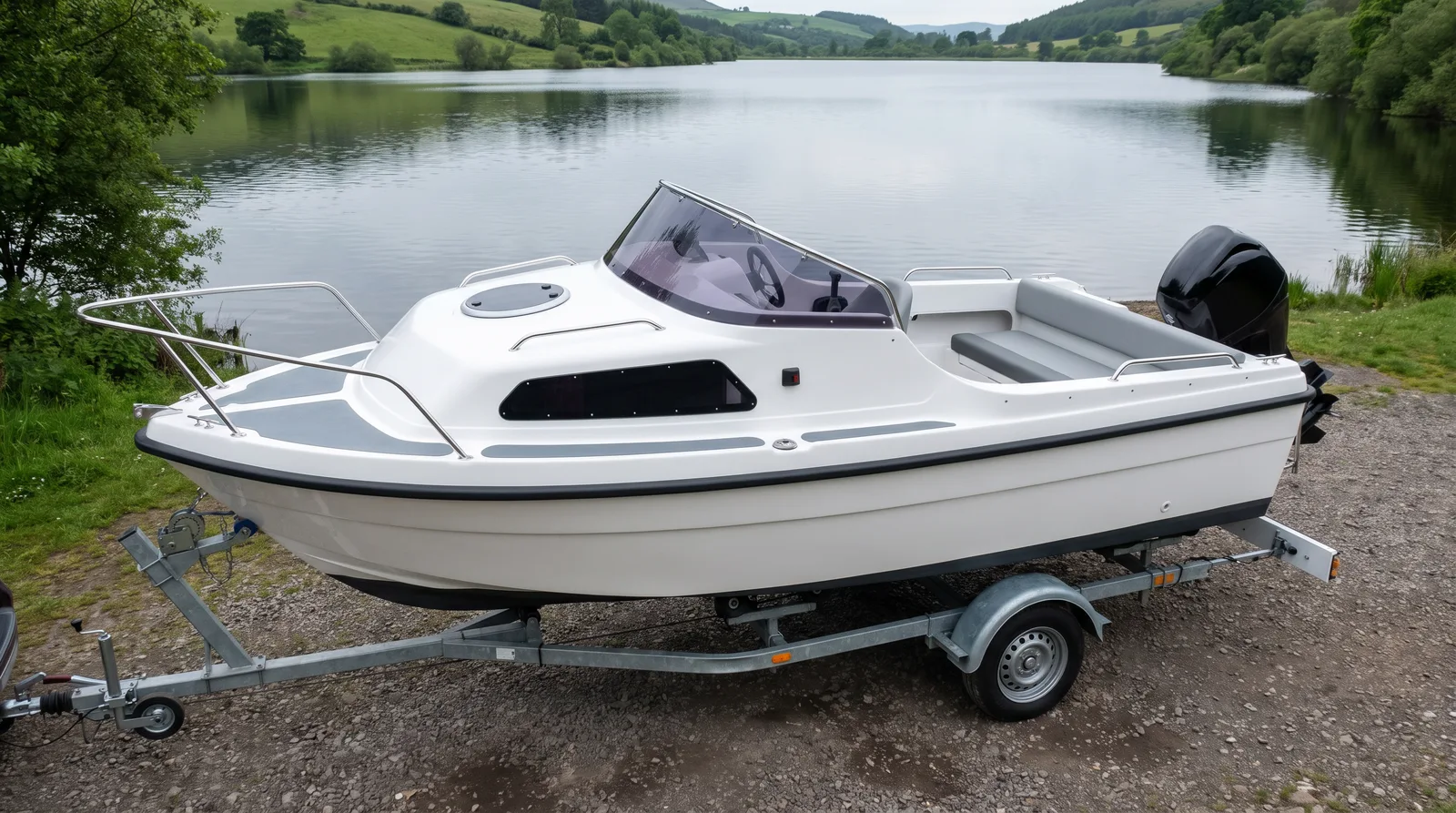
This is the first of four articles about one boat, the Quicksilver Activ Cabin 455, a small motor boat with a cuddy cabin, about 4.4 metres long according to our records, which is usually moved on a trailer. The idea comes from the multi-part boat tests that boating magazines run. One thing is different, and it belongs at the very top: we have not driven this boat, not a single metre. This is not a sea trial. We say nothing about how it handles, how it is built or what its quality is like, because we do not know. This insurance check looks at the paperwork instead: the proposal form, the policy schedule and the questions that come up after a claim. The model is one of the boats on the NAMMERT books, which is why it is part of this series. The question throughout is what the policy should say about this boat.
The first point is the name. In the documents that reach us the model appears as Activ Cabin 455 or Activ 455 Cabin, and there is also an open version without the cabin that turns up as Activ Open 455 or Activ 455 Open. In the contract this is more than a spelling question. Personal accident sections often refer to the craft named in the schedule, and after a loss the insurer compares what the policy says with the boat at the jetty. Copy the name exactly from the bill of sale or the registration, state whether it is the cabin or the open version, and add the hull identification number. That number tells two boats with the same name apart, for example when a stolen boat turns up again.
The second point is the engine. A motor boat of this size almost always has an outboard on the transom, and many hull wordings treat an outboard very differently from a built-in engine. A fixed engine is usually part of the boat and of its sum insured. An outboard is often a separate item that has to be named in the schedule with its own value; if it is missing there, it may not be insured at all. Many wordings also carry a security condition, such as no payment for an outboard that was not locked with a security bolt or kept in a locked building. Enter make, power and serial number in full, fit the lock before the boat spends its first night anywhere, and read the outboard clause before the first trip.
The third point is who may skipper the boat. Liability wordings usually require that the boat is used by an authorised person, with the owner's consent and with any licence the authorities require. Hull wordings commonly exclude damage caused by someone without the licence that is mandatory for that boat or that cruising area. With a small cuddy boat this comes up sooner than people think: in Germany, for example, whether a licence is needed depends on engine power and on the waterway, and other countries draw the line elsewhere. Fitting a stronger outboard later can change both the licence question and the risk the insurer accepted. Duties after a loss normally apply to anyone you lend the boat to as well.
The fourth point is the cruising area. A boat that fits behind an ordinary car can be on a different lake or on the coast within a day. Policies usually define the waters where cover applies, from inland waters only up to coastal seas such as the Baltic or the Mediterranean, or worldwide. If the schedule says inland waters and the summer holiday takes the boat to the Adriatic, the boat is outside the contract there. Some wordings allow a short extension on request, some include one for a few weeks a year, others none at all. Check this before the trailer is hitched; part four of this series looks at trailering, launching and travel abroad in more detail.
The fifth point is the level of hull cover, and it decides more than the price. Basic hull covers often include named perils only, such as storm, hail, lightning, fire, explosion and theft of the whole boat. Grounding, collision and sinking as a result are then not covered. Broader hull cover adds accidental damage, and often break-in theft, theft of fitted parts and vandalism. For a small motor boat that is used in shallow bays, near bathing areas and at slipways, that is the difference that matters day to day. The basis of settlement can also differ, actual cash value in one policy, an agreed value in another; part two explains why that matters, and part three goes through typical damage.
One last line deserves a look before the first guests climb aboard: who is covered under any personal accident section. Some policies cover only the owner, others the owner's close family, others every authorised person on board, including friends and guests. The sum insured may be divided by the number of people on board at the time of the accident, and cover usually relates to the use of the boat rather than applying around the clock. A boat of this size fills up quickly; if you go out with several people, settle this before the season starts.
Insurance checkPart 1 of 4
Quicksilver Activ Cabin 455: an insurance check
All parts at a glance
- Quicksilver Activ Cabin 455 insurance check (Policy)
- Quicksilver Activ Cabin 455 insurance check (Value)
- Quicksilver Activ Cabin 455 insurance check (Damage)
- Quicksilver Activ Cabin 455 insurance check (On the move)
Worth checking
Common questions
Is this a sea trial of the Quicksilver Activ Cabin 455?
No. We have not driven the boat and say nothing about handling, build or quality. The series only looks at what the policy should say and at what policy wordings generally say about a motor boat of this kind.
My bill of sale says Activ 455 Open, but I have the cabin version. What now?
Have the description corrected and give the hull identification number. The cabin and the open version are different boats, and after a claim the insurer compares the schedule with the boat itself.
Is my outboard automatically part of the hull cover?
Often not. Many wordings insure an outboard only if it is named in the schedule with its own value, and many add a security condition such as a locking bolt. Check both in your own policy.
Related
