Magazine / Magazine: Boat and season
Leaving the boat in the Med for winter: what to check in the policy
A sailing yacht in Mallorca, a motor yacht in Croatia, the owner back home: the clauses that decide a Mediterranean winter, and what to settle before the flight home.
20 October 20267 min readNAMMERT Assekuradeur GmbH
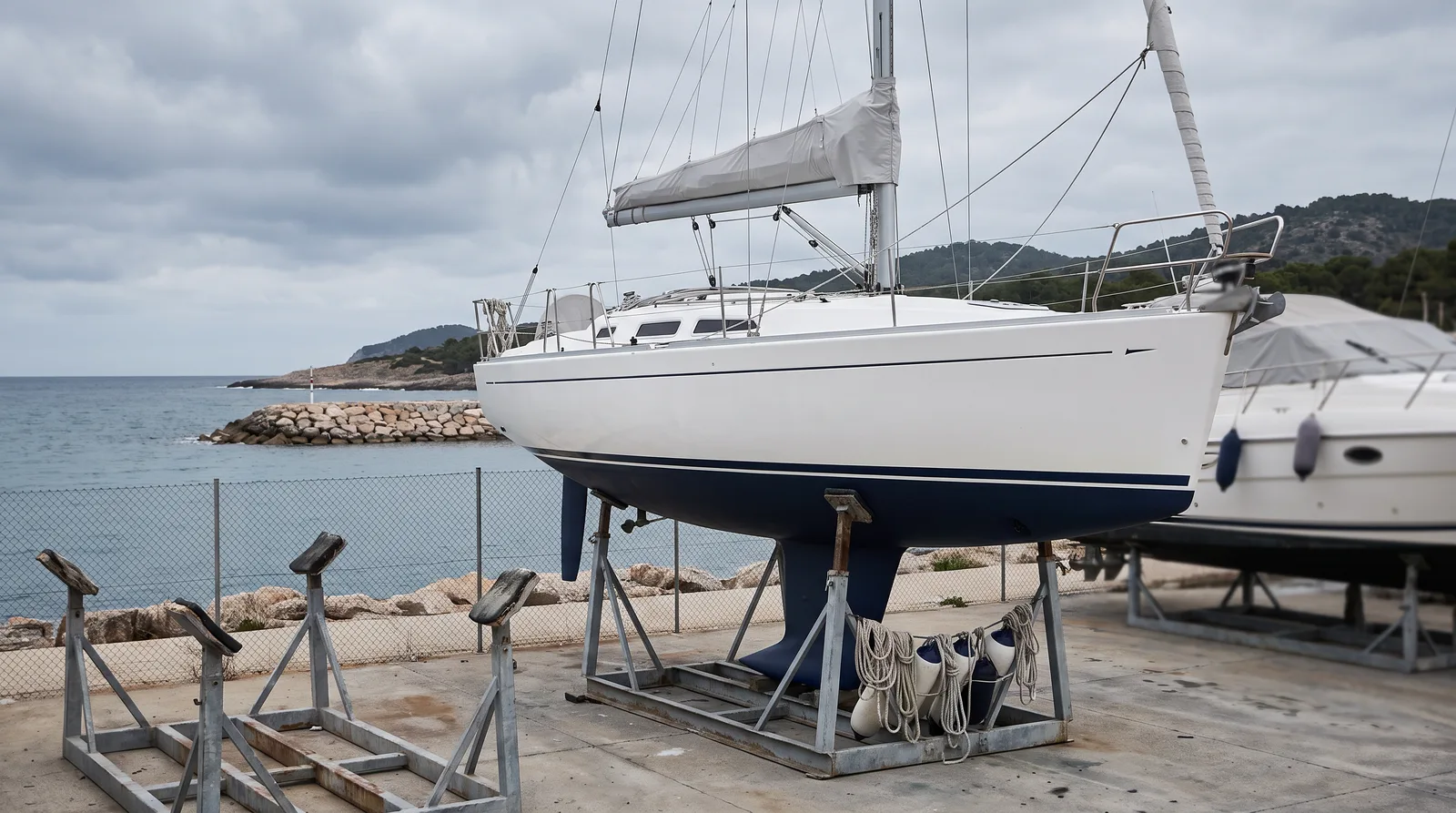
Leaving the boat in the Med for winter is routine for many owners from northern Europe: the sailing yacht stays in Mallorca or on the Costa Brava, the motor yacht in Istria or Dalmatia, the catamaran in a Greek yard. For five months nobody from the family checks on it. What to check in the policy before the flight home comes down to four questions: does the cruising area reach the berth, what happens while the boat is unattended, how is weather treated, and what does theft ashore require.
Start with the cruising area. A hull policy names a cruising area on the schedule, and in many wordings the areas form a ladder: inland waters, then the North Sea and Baltic, then the Mediterranean, then the Atlantic coast, then worldwide. A boat that was insured for the Baltic and delivered south in autumn may sit outside its area in Palma or Split, even if it never moves all winter. Check whether going beyond the agreed area needs prior written consent, and whether any short extension (some wordings allow a number of weeks per year) could possibly last a whole winter. It usually cannot.
Ashore, look for the clause on stays on land. A common formula requires a berth objectively suitable for craft, which a yard with proper cradles is and a trailer behind a holiday flat often is not. Theft is where the detail matters. Look for an exclusion of theft or malicious damage when the boat is stored ashore improperly on a site that is not fenced and locked. Where that exclusion is absent, the deductible may still apply unless the boat was kept in a locked building or a fenced yard. A guarded marina is not automatically a fenced one; ask the yard how the hardstand is closed at night.
Afloat, the question is who looks after the boat. Some hull wordings contain an exclusion for losses while the vessel lies unmanned off an open coast for more than 24 or 48 hours, unless it is ensured that someone can move it at once when danger threatens. A mooring buoy in an open bay for months with no arrangement is exactly that case. In a marina, a written agreement with the harbour office or a local yacht service that checks lines and fenders in a blow is the practical answer. Whatever the wording, the duty to avert and minimise a loss remains with the owner after a claim arises.
Then the weather. A Mediterranean winter is not a mild summer: the Mistral, the Tramontana, the Bora and the Levante bring gales, there are weeks of rain, and the sun keeps working on covers and teak. Hull wordings commonly list weather influences such as rain, snow, ice, heat, frost and sunlight as an exclusion, with an exception for damage caused by storm. Rot and mould usually sit in the same list. A damp, sealed saloon for five months is therefore a question of ventilation rather than of the hull cover, and the wording will say so.
Two points are usually noticed only in spring. Theft of loose items that were not properly packed, covered, lashed or locked inside the boat is a frequent exclusion: the tender on the foredeck, the outboard on the pushpit, the liferaft in an open cradle. And a seasonal policy that charges only for the sailing months may leave the winter uncovered entirely, in the south as much as at home; check the dates on the schedule. Third party liability normally travels with the boat, but check that losses abroad are included, because a boat that breaks loose in a gale and damages its neighbour is a liability claim, not a hull claim.
If a message from the harbour arrives in January, report the loss to the insurer without delay, and report theft, break in and vandalism to the local police and to the harbour authority as well. That can be done from home if the berth contract, the harbour office contact and photos of the boat's condition before departure are at hand. The bottom line: a Mediterranean winter does not need a different policy, only one whose cruising area reaches the berth, and an owner who settles before leaving who will check the boat. This applies to sailing yachts, motor yachts and catamarans alike.
SeriesPart 12 of 12
Laying up a boat for winter: from lift-out to spring
All parts at a glance
- Laying up: what actually matters in October
- Lifting out: the three minutes when the whole boat is visible
- The delivery trip to winter storage
- Unstepping the mast
- Boat fallen off its stands
- Charging through the winter
- Mice and mould in winter storage
- Leaving the boat afloat for winter
- Boat damaged at the yard during winter work
- Refitting a boat over winter
- Servicing safety equipment over winter
- Leaving the boat in the Med for winter
Worth checking
Common questions
Do I have to tell the insurer that the boat is wintering abroad?
Not because of the winter as such. What matters is whether the berth lies inside the cruising area on the schedule. If the schedule only names the North Sea and Baltic, the area has to be changed before the boat is delivered south.
Is gale damage at a winter berth in Spain or Croatia a claim?
Check whether storm is a named peril in the wording. Where it is, that applies in winter and abroad as well, provided the berth lies inside the cruising area. Weather damage without a storm, such as rain or sun, is often on the exclusion list.
Is a guarded marina enough?
For theft ashore, look at whether the wording asks for a fenced and locked site. Afloat, look at whether it asks that someone can move the boat at once when danger threatens. Settle both points in writing with the marina.
Related
