Magazine / Magazine
Leaving the boat afloat for winter: ice, storms and the policy wording
October brings the choice between the yard and the berth. Owners leaving the boat afloat for winter should read four clauses in the wording first.
9 October 20267 min readNAMMERT Assekuradeur GmbH
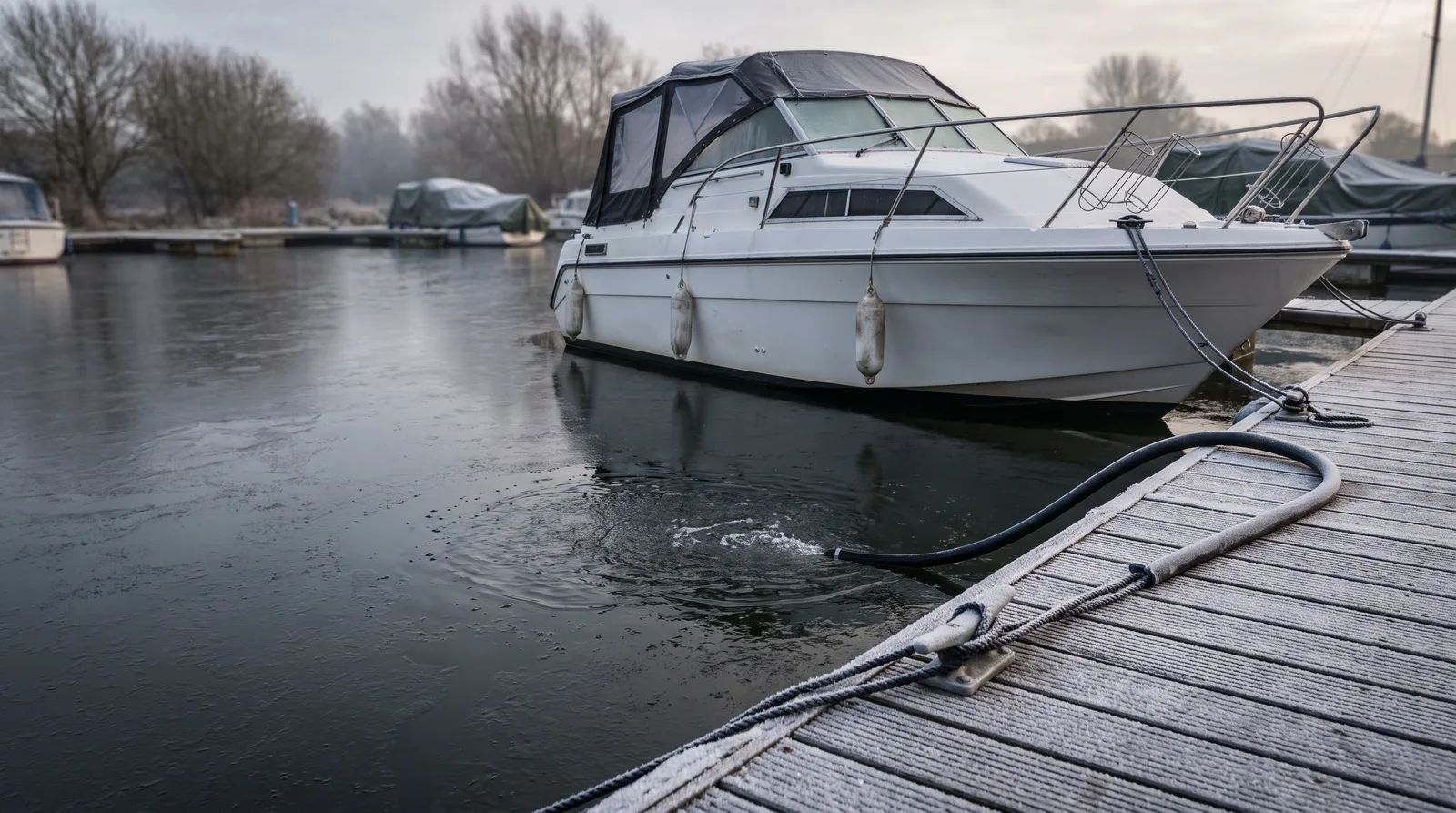
Every October the same decision comes up on every pontoon: lift out, or leave the boat afloat for winter? Leaving the boat in the water is what plenty of owners of motor boats, houseboats, trawler yachts and sailing yachts choose, on the inland lakes of Germany, in the Baltic marinas and all the more in the Mediterranean. It is often the kinder choice for the hull. What ice, storms and the type of contract mean for the cover, though, is in sentences of the policy wording that nobody reads in July.
Start with where the boat is. Most hull wordings treat a berth in the water as the normal case and write separate rules for time ashore. The German conditions we use as an example here have their own clause for the boat on land, lifting out and launching. Staying afloat therefore rarely needs a notice by itself. Moving the boat to another marina for the winter is different: check that the new berth still lies within the cruising area named in the schedule.
Then the sentence that decides a winter afloat. Look at the exclusions for weather. German hull wordings list it word for word: rain, snow, ice, heat, frost, sunlight. They are excluded unless the damage follows a storm, or in some versions an insured natural hazard. In practice ice pressing against the hull, a seacock frozen solid or a mooring line snapping under the weight of ice is weather first. Whether a storm lies behind it is decided case by case after a loss, not by the calendar.
Prevention is therefore the owner's job, not the contract's. In harbours that freeze, an air bubbler keeps the water around the hull open; it needs power, and the power needs someone who checks that it is still running. Mooring lines get snubbers and chafe protection, fenders hang lower than in summer. The engine's raw water circuit is drained or filled with antifreeze even though the hull is afloat, because everything above the waterline freezes just as it would ashore.
The second clause to find is about absence. German wordings refuse to pay when the boat lies unattended off an open coast for longer than a fixed number of hours and nobody can be relied on to move it when danger threatens; depending on the version that window is 24 or 48 hours. In winter that is the rule rather than the exception, with the owner living hundreds of kilometres away. Ask what your contract says, and name a person with a key and a written instruction.
The third clause is about time. Some contracts are seasonal and charge only for the boating months; one German version gives no cover at all from 1 November to 31 March, afloat or ashore. Before deciding to leave the boat in the water, read the schedule and find out what kind of contract it is. A boat that sinks at the berth in February during such a gap is a loss without hull cover, and no clause about ice or storms will change that.
If a boat sinks at its winter berth, the question after a loss is the cause, as in summer. Many wordings list sinking among the accident perils and at the same time exclude poor maintenance. A bilge pump wired to a flat battery, a cockpit drain blocked by snow, a weeping stern gland: those are the cases where the argument turns to maintenance. Photos of the boat at the end of the season and notes on each visit turn that argument into one about documents rather than memories.
And if the boat breaks free in a gale and damages the boat next door, that is a matter of third party liability, not hull. A liability wording typically covers the owner's legal liability for keeping and using the boat, and a boat at a winter berth is being kept even with nobody aboard. After any loss the duties look alike almost everywhere: report without delay, limit the damage where reasonable, and let the insurer inspect before the repair starts.
Worth checking
Common questions
Do I have to tell the insurer that the boat stays in the water?
Usually not for that reason alone, because most wordings treat a berth afloat as normal. If the boat moves to another harbour for winter, check the cruising area in the schedule.
Is ice damage to the hull usually covered?
Look at the weather exclusion. German wordings name ice and frost there and only make an exception when the damage follows a storm or an insured natural hazard. Prevention is the owner's part.
What does a seasonal contract mean for a boat left afloat?
Read the period of cover in the schedule. One German seasonal version leaves the boat without cover from 1 November to 31 March, whether it is ashore or in the water.
Related