Magazine / Magazine
Boat fallen off its stands: winter storage ashore and the claim
In February the yacht lies beside its stands. Whether it is a hull claim depends on the storage place, storm or accident, how the stands were kept and the photos from day one.
5 October 20267 min readNAMMERT Assekuradeur GmbH
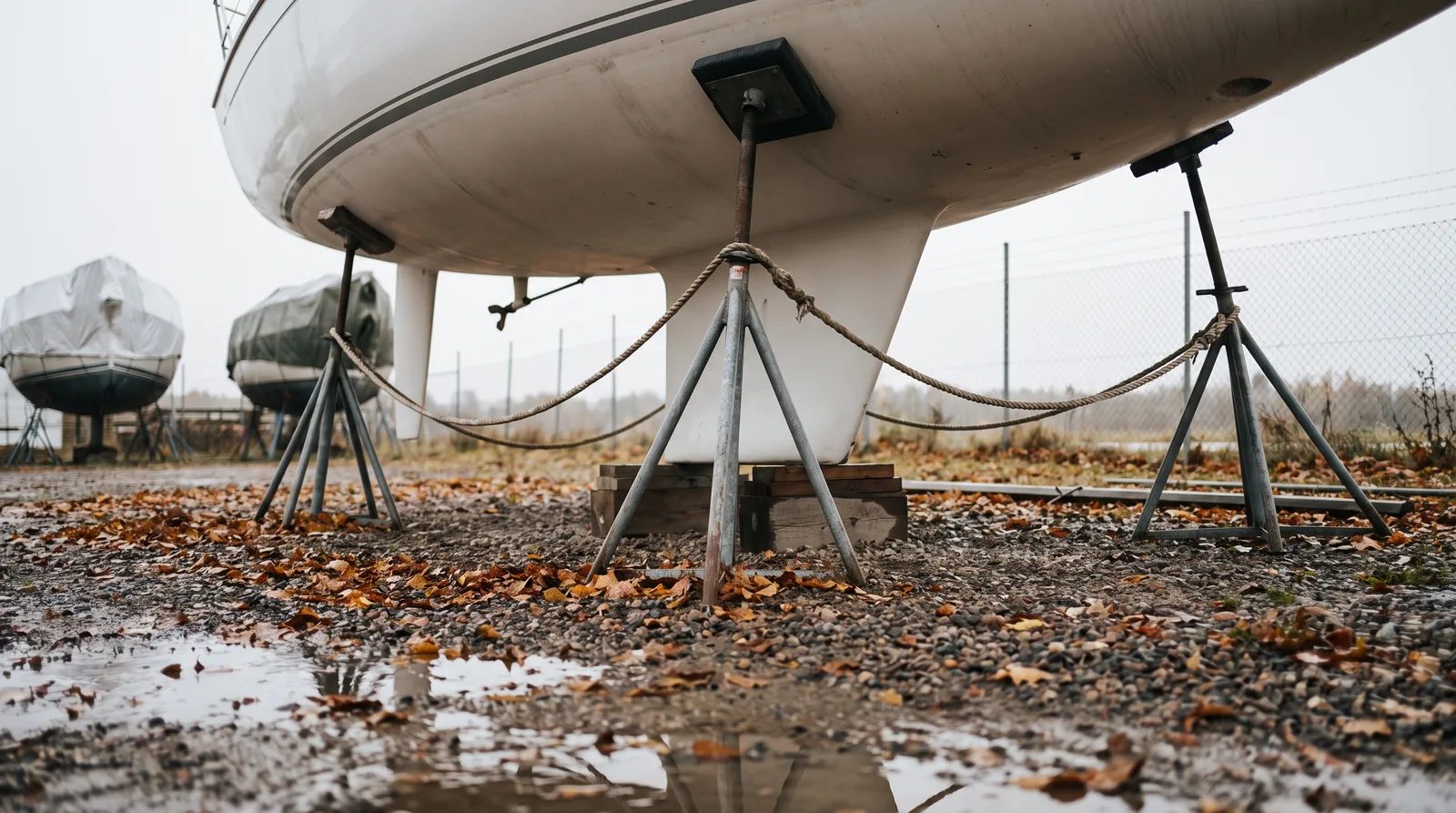
In February the yard calls: the boat has fallen off its stands. It is a pattern that comes back in claims handling every winter, and it usually starts in autumn, when the boat is lifted ashore for winter storage. A sailing yacht rests its keel on timber blocking while three or four steel stands with screw spindles keep it upright. A motor boat sits in a storage cradle, a trailer boat or a jet ski stays on its trailer. Months later the ground has softened, a spindle has worked loose or a gale has caught the hull from the side, and the owner is left with a damaged boat and the question whether this is a claim.
The first question in the wording is where the boat was. A typical German hull wording, used here as the example, keeps cover going while the vessel is ashore, including hauling out and launching, but only at a place that is objectively suitable for watercraft. A yard or club hardstanding with firm ground and stands built for the weight and shape of the hull meets that test. A field behind a house, with borrowed stands sinking into wet soil, may not. Some contracts also run only for the sailing season and leave the winter months without cover at all: find out which kind you hold before the boat goes on the stands.
Next comes the cause. Storm is a named peril in most hull wordings, and the German example defines it as wind of at least Beaufort force 8, that is 62 km/h. Proof comes from readings at a nearby weather station for that night, not from memories of a windy week. If the boat fell without a storm, for instance because a stand sank into thawing ground, the question becomes whether the policy includes accidental damage, which many wordings describe as including collision with fixed objects. Whether a boat toppling over ashore counts as such an accident is rarely spelled out in the contract; the sequence of events decides, and so does the evidence.
Three clauses tend to stand against such a claim. The maintenance exclusion: a spindle nobody has checked since autumn, a block of timber that was already split last year. The weather exclusion, which in many wordings removes damage from rain, frost and snow unless a storm caused it. And gross negligence: putting a yacht on only two stands, or borrowing one for another boat, can lead to a reduction in proportion to the fault. Some wordings waive that reduction up to a share of the sum insured, others do not; read where your contract draws that line before the boat goes ashore.
In a crowded yard a boat is rarely alone. If a neighbouring boat falls onto yours, your own damage is again a hull matter, and the insurer will want every document about the incident in order to recover from the other owner or the yard. If your boat falls onto another, the question is liability. Third party liability cover for a boat usually attaches to owning and keeping the vessel, which takes in a boat resting ashore, and whether you are liable at all depends on fault. Damage to a rented storage space or shed is a separate point that some liability wordings include and others leave out.
For the claim itself, the day of the call matters most. Do not let anyone right the boat before photographs are taken: the position of the hull, every stand with its spindle, the blocking, the ground and the marks in it. Keep the wind readings and the storage contract, including what was agreed about setting the boat up. Report the loss to the insurer promptly, keep rain and snow out of the hull, since most wordings make limiting the loss a duty, and allow an inspection before any repair starts. Check as well how the deductible applies per claim.
The cheapest winter claim is the one that never happens, and a few visits are enough. On a sailing yacht the keel carries the weight and the stands only keep the balance; each needs a board under its foot on firm ground, and opposite stands should be chained or tied together. On a motor boat in a cradle, check that the pads still touch the hull. A trailer boat or jet ski needs wheel chocks and a jockey wheel that cannot sink into soft ground. After every gale and after the first thaw, check the spindles: half an hour that can save a season.
Worth checking
Common questions
My boat fell off its stands in a gale. Is that a hull claim?
Often yes, if the wind reached the storm threshold in your wording. The German example sets it at Beaufort force 8, 62 km/h. Readings from a nearby station are the proof, and seasonal policies may not run in winter at all.
What if there was no storm?
Then it depends on whether your policy includes accidental damage and how the insurer views a boat toppling over ashore. Expect questions about maintenance of the stands and about frost or rain as the cause.
A neighbouring boat fell onto mine. Who pays?
Your own damage usually runs through your hull cover, and the insurer may recover from the other owner or the yard if they were at fault. Keep every document and photograph of the incident for that.
Related